Introduction
It's 11:30 p.m. You have an early meeting tomorrow, your eyes are tired, and you know you should be asleep. Yet instead of turning off the lights, you keep scrolling through short videos, watching "just one more" episode, or browsing social media with no real purpose. If this sounds familiar, you may be experiencing what Chinese internet users call "报复性熬夜" — literally, "revenge staying up late" — known in English as revenge bedtime procrastination.
This phenomenon has quietly become a global habit, especially among young professionals, students, and parents. But while those stolen late-night hours feel like freedom, they come at a real cost to your health, productivity, and mood. This article explores what revenge bedtime procrastination is, why we do it, how to tell if it describes you, and — most importantly — how to break the cycle.
What Is Revenge Bedtime Procrastination?
Revenge bedtime procrastination describes the decision to delay sleep in order to reclaim personal leisure time, even when you know it will leave you exhausted the next day [Sleep Foundation]. The concept gained traction on Chinese social media, where workers in high-pressure jobs described staying up late as a form of "revenge" against a daytime schedule they couldn't control.
The psychology is simple: when your days are consumed by work, commuting, chores, and obligations, nighttime becomes the only territory that feels truly yours. Going to sleep feels like surrendering the last free hours of the day — so you fight back by staying awake.
Bedtime Procrastination vs. Insomnia
It's important to distinguish this from insomnia. People with insomnia *want* to sleep but can't. Revenge bedtime procrastinators *can* sleep but choose not to. It's a voluntary delay, driven by emotion rather than biology — which also means it's a habit you can change.
Signs This Might Be You
Not sure whether the phrase applies to you? Here are the most common telltale signs:
- You delay sleep without a real reason. There's no deadline, no emergency — you're just scrolling, gaming, or watching videos.
- You feel a sense of payoff or revenge. Staying up feels like reclaiming something that was taken from you during the day.
- You know you'll regret it, and you do it anyway. Awareness doesn't stop the behavior; tomorrow-you will pay the price.
- Your daytime schedule feels suffocating. Long work hours, caregiving duties, or packed calendars leave you with no genuine downtime.
- Weekends become "recovery sleep" marathons. You chronically undersleep on weekdays and crash on weekends, a pattern that still disrupts your body clock [AASM].
If three or more of these resonate, chances are this trending phrase is, indeed, talking about you.
Why Do We Do It? The Psychology Behind the Habit

Reclaiming a Sense of Control
The core driver is a lack of autonomy during waking hours. When work, family, and social obligations dictate every minute of your day, the late-night hours become the only time you control. Staying up is less about entertainment and more about protest.
Depleted Willpower at Night
Self-regulation is a finite resource. By evening, after a full day of decisions, discipline, and stress, your ability to resist temptation is at its lowest — which is exactly when the phone is glowing next to your pillow.
The Dopamine Trap of Screens
Short-form video, social feeds, and autoplay features are engineered to keep you engaged. Each swipe delivers a small hit of novelty, making "just five more minutes" turn into two hours without you noticing.
Revenge Procrastination After Hard Days
Interestingly, the behavior often intensifies after the most stressful, least satisfying days — precisely when your body needs rest the most. The worse the day, the stronger the urge to "steal back" time at night.
The Hidden Health Costs
Occasional late nights are harmless. The problem is that revenge bedtime procrastination is rarely occasional — it's a nightly pattern, and chronic sleep loss has well-documented consequences.
Adults need at least seven hours of sleep per night for optimal health, yet roughly one in three adults regularly falls short of that benchmark [CDC]. Consistently cutting sleep short has been linked to:
- Weakened immune function. Sleep plays a critical role in immune defense, and insufficient sleep can leave you more vulnerable to infections [Mayo Clinic].
- Impaired memory and concentration. Sleep is when the brain consolidates learning and clears metabolic waste; skimping on it dulls focus and slows reaction time the next day [NIH].
- Higher risk of chronic disease. Long-term sleep deprivation is associated with increased risk of heart disease, high blood pressure, diabetes, and obesity [CDC].
- Worse mental health. Poor sleep and anxiety or depression reinforce each other in a vicious cycle, and irregular sleep schedules are linked to worse mood regulation [Harvard Public Health].
- Weight gain and appetite changes. Sleep loss disrupts the hormones that regulate hunger, increasing cravings for high-calorie foods [Mayo Clinic].
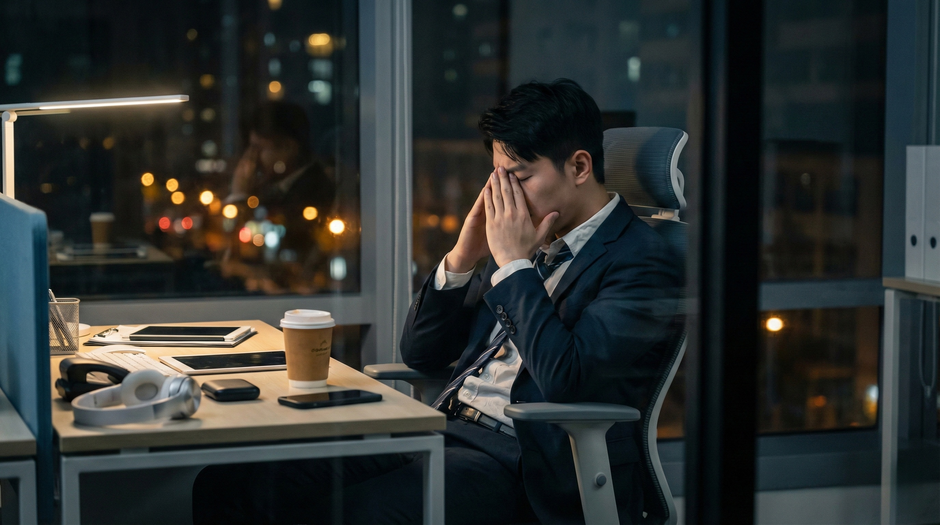
There's also a cruel irony: the "free time" you gain at night is often spent in a foggy, low-quality state, while the exhaustion it creates makes the *next* day feel even more controlling — which fuels another night of revenge. The cycle feeds itself.
How to Break the Cycle: Practical Strategies
The good news is that revenge bedtime procrastination responds well to intentional changes, because it's a behavioral pattern rather than a medical condition.
1. Reclaim "Me Time" During the Day
Since the root cause is a lack of daytime autonomy, the most effective fix is scheduling genuine leisure *before* nightfall. Even 20–30 minutes of protected personal time — a walk, a hobby, reading in a café — reduces the desperation that fuels midnight rebellion.
2. Set a "Bedtime Alarm" Instead of a Wake-Up Alarm
Most people only set alarms to wake up. Try setting one for 45–60 minutes before your target bedtime as a signal to start winding down. Consistent sleep and wake times are a cornerstone of healthy sleep hygiene [AASM].
3. Create a Wind-Down Ritual
Replace screen time with a low-stimulation routine: dim the lights, stretch, take a warm shower, or read a physical book. Keeping electronic devices out of the bedroom reduces both blue-light exposure and the temptation to scroll [Sleep Foundation].
4. Make Your Phone Boring at Night
Turn on grayscale mode, delete or hide the most addictive apps after 10 p.m., or charge your phone across the room. Friction is your friend — every extra step between you and the feed helps.
5. Reframe Sleep as the Real "Me Time"
Here's a mindset shift worth trying: staying up late doesn't give you more life — it borrows energy from tomorrow at punishing interest rates. Sleep, by contrast, is an investment that makes your waking hours longer in quality, if not in quantity. Treating rest as an act of self-care, rather than a chore imposed by the day, removes the urge to rebel against it.
6. Don't Aim for Perfection
If you slip and stay up late occasionally, don't spiral into guilt — that all-or-nothing thinking often makes the habit worse. Aim for consistency, not perfection. If sleep problems persist for months despite your best efforts, consider speaking with a doctor, as chronic insomnia or other sleep disorders may be involved [Cleveland Clinic].
Summary
"Revenge bedtime procrastination" — the habit of deliberately staying up late to reclaim personal time — is a relatable response to overscheduled, high-pressure modern life. If you regularly delay sleep for no real reason, feel a sense of defiance while doing it, and regret it every morning, then yes: this phrase is talking about you. But while those midnight hours feel like freedom, chronic sleep loss quietly erodes your immune system, mental sharpness, mood, and long-term health [CDC]. The way out isn't sheer willpower — it's restoring balance to your days. Schedule real downtime before evening, build a calming wind-down ritual, put friction between yourself and your phone, and reframe sleep as the most generous gift you can give yourself. True revenge against a hectic life isn't stealing hours from the night; it's waking up rested enough to actually own your day.
References
This article references the following authoritative sources:
- Centers for Disease Control and Prevention — US national public health agency
- National Institutes of Health — US government medical research agency
- Mayo Clinic — Nonprofit American academic medical center
- Cleveland Clinic — American nonprofit academic medical center
- Harvard T.H. Chan School of Public Health — Harvard University public health graduate school
- American Academy of Sleep Medicine — Professional society for sleep medicine
- Sleep Foundation — Independent organization providing sleep health information